


INDEPENDENT EDITORIAL COMPARISON | 2026 EDITION
Spotminders vs. RhinoKey: Which Wallet Tracking Card Actually Earns a Spot in Your Wallet?
I carried both cards in my everyday wallet for about three months, then started leaving my bag in rideshares on purpose to see which tracker actually saved me. Both are 1.8mm, the thickness of a credit card, so neither one turns your wallet into a brick. The real split is the ecosystem. Spotminders lives on Apple Find My and charges on the same MagSafe puck as my iPhone. RhinoKey does more on paper, it tracks on iPhone and Android both, but it insists on its own charging pad. After a full season of pinging these things across airport lounges and couch cushions, I have a pretty firm opinion about which one I would keep in my wallet. Here is what stood out.

Why we ran this test
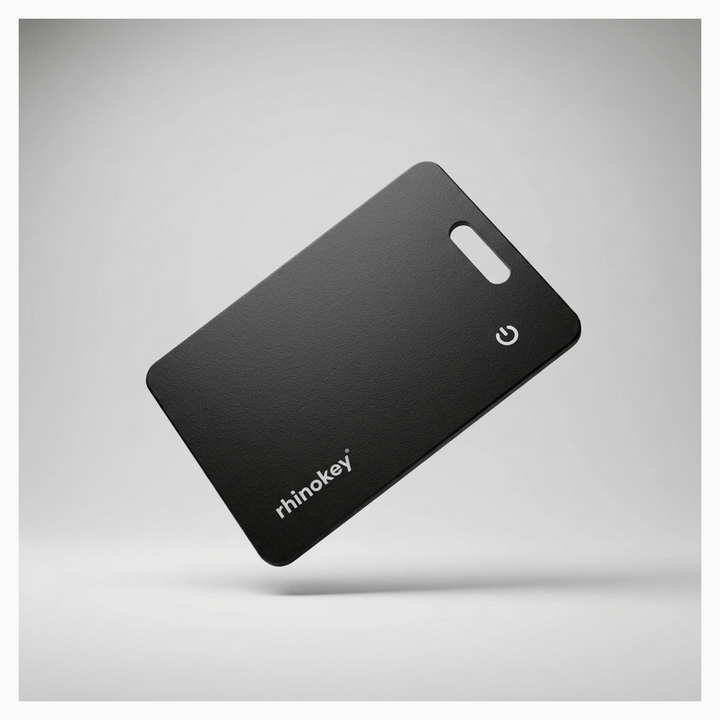
The RhinoKey Smartcard has built a genuine following, especially with Android users who finally get a slim finder that fits in a wallet. It runs about $42, ships in clean minimalist packaging, and it works on iPhone and Android alike. If you live in Google's world, it is one of the only credit-card trackers that even talks to your phone, and I get the appeal.
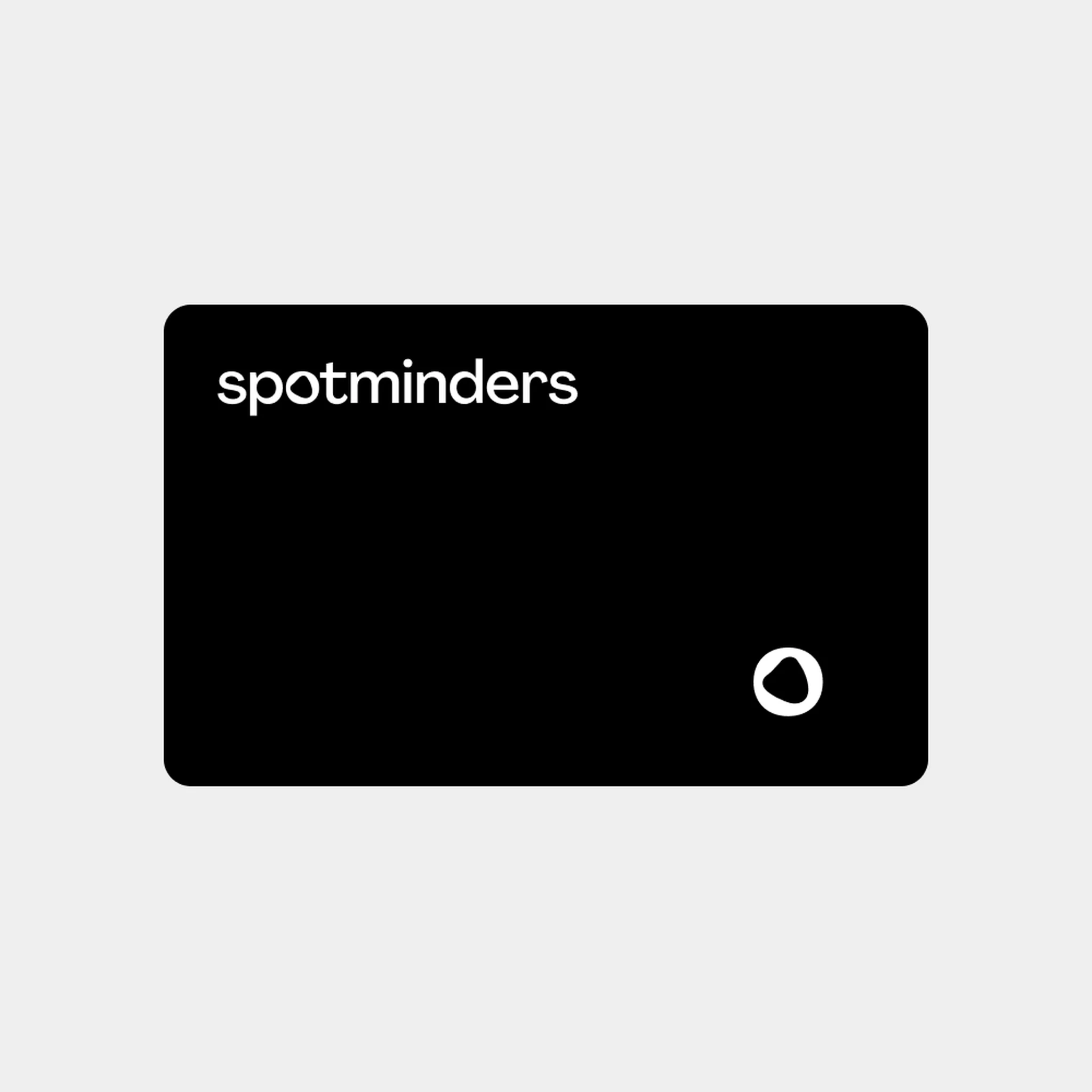
Then a friend who loses everything talked me into the Spotminders Tracking Card. It is a flat $39 one time with no subscription, it is Apple MFi-Certified instead of just "compatible," it charges on the same Qi or MagSafe pad as your phone, and it is IP67 waterproof with up to eight months on a single charge. I wanted to know whether paying once for an Apple-certified card actually beat RhinoKey's do-it-all approach for someone who lives on an iPhone.
So I carried both for three months. Real life: airport security trays, coat pockets, a bag I left in a rideshare on purpose. I tracked how long each battery lasted, how much of a pain each one was to recharge, and how quickly Find My pointed me at the missing card. Here is what I learned.
At a glance: Spotminders vs. RhinoKey
The specs side by side before I get into the day-to-day details.
| Spec | Spotminders | RhinoKey |
|---|---|---|
| Price | $39 one-time, no subscription | $42, charger often about $15 extra |
| Battery life | Up to 8 months per charge | About 5 months per charge |
| Recharging | Any Qi or MagSafe pad | Proprietary pad only |
| Apple certification | Apple MFi-Certified | "Works with Find My" badge only |
| Waterproofing | IP67 rated (about 3 ft, 30 min) | Says waterproof, no IP rating listed |
| Phone platforms | Apple Find My only, no Android | Works on iPhone and Android |
| Warranty & returns | Lifetime replace-or-refund, 100-day returns | 1-year warranty, 100-day returns |
| Color options | Black, Pink, Orange | Black, White |
| Android & Google Find Hub | Not available on Android | Full Android and Google Find Hub support |
| Rating | 4.8/5 from about 19,431 reviews | Not listed |
| Track record | Over 1,000,000 sold | Newer, smaller user base |
Green marks the better pick in each row.
Everyday carry and slim fit
This is the part that decides whether you actually keep the thing on you. A finder card only helps if it is thin enough that you stop noticing it, so I lived with both in the same slot behind my cards for weeks and paid attention to the bulk, the pings, and how often I had to reach for my phone to find them.
- At 1.8mm it is the same thickness as a credit card, so it disappears into the slot behind my debit card and never bulks out my wallet
- The 85 by 54 mm footprint matches a bank card exactly, so it sits flat and never snags when I pull cash
- Plays a loud chime from the Find My app when it is nearby, which is how I dug it out of a couch cushion twice
- Works fine inside my RFID-blocking wallet, so tap-to-pay and the tracker get along without me thinking about it
- One charge lasted me the better part of eight months, so carry it and forget it is genuinely true here
- Also 1.8mm thin, so on pure slimness it ties Spotminders and sits just as flat behind your cards
- Same credit-card outline, and over a full day in my back pocket I never felt it there
- Chimes when it is close by and stays friendly with RFID-blocking wallets, same as the Spotminders
- Battery runs about five months, so you are back on the charger a few times a year more often
- No monthly fee, which I appreciated, though the charging pad it needs is usually sold on its own
On slimness alone this is basically a tie. Both cards are 1.8mm and both vanish into a wallet. The gap shows up around the edges: Spotminders holds its charge for months longer and tops up on the same MagSafe puck I use for my phone, while RhinoKey wants its own pad that often costs extra. If thickness is all you care about, pick either one. If you care about how little the card nags you once it is in your wallet, Spotminders pulled ahead for me.
Build quality and charging
Both cards feel well built, but they take opposite approaches to the one chore a rechargeable tracker actually has: charging. One reuses the wireless pad already sitting on your nightstand. The other sends you down a proprietary path. That single choice shaped how often each card annoyed me.
- Charges on any standard Qi pad or MagSafe puck, so the same charger as my iPhone tops it up with no extra hardware
- The rechargeable battery goes up to eight months between charges, the longest stretch of anything in my wallet
- Rated IP67, so it shrugged off a coffee spill and a run through a rainy parking lot without a hiccup
- Apple MFi-Certified, the certification Apple actually puts trackers through, not just a compatibility label
- The scratch-resistant finish still looked clean after three months of grinding against keys and coins
- Backed by a lifetime replace-or-refund promise and a 100-day return window, with free shipping over $50
- Genuinely dual-platform: it works with Apple Find My and with Android through Google Find Hub, which Spotminders cannot do
- Same 1.8mm slim card body, nicely made, with a clean two-tone look in black or white
- Carries the official "Works with Apple Find My" badge, so it is a legitimate finder, just not marketed with the exact MFi wording
- Rechargeable for about five months per charge, solid, if a few months short of the Spotminders
- Charges only on RhinoKey's own proprietary pad, which is often a separate add-on of around $15 rather than in the box
- Says it is waterproof but publishes no IP rating, so I stayed more careful with it around water
RhinoKey's build is legit, and the dual-platform support is a real win. If you or anyone in your house runs Android, it is the card to get, full stop. But for an iPhone person, Spotminders was just less hassle. It charges on the MagSafe puck I already own, it lasts months longer per charge, and the MFi certification plus the IP67 rating meant I stopped thinking about it. RhinoKey only pulls ahead if Android support is the one thing you cannot live without.
Slim fit and everyday carry
A tracking card lives in your wallet every hour of the day, so how it fits and how it feels to carry matter more than the spec sheet lets on. I carried both for three months and paid attention to thickness, wallet fit, and which phone each one actually works with.
- Just 1.8mm thin, about the thickness of two credit cards, so it disappears into a card slot
- Standard 85 x 54mm card size that fits any wallet, money clip, or passport sleeve
- After three months in my back pocket it still sits perfectly flat, with no bowing
- RFID-safe, so it never blocked or interfered with the tap-to-pay cards next to it
- Comes in Black, Pink, or Orange, so it is easy to pick out from your bank cards
- At 1.8mm it is exactly as thin as Spotminders, so slimness is a straight tie
- Works with both Apple Find My and Android Find Hub, the reason to pick it if you carry an Android phone
- Comes in Black or White only, half the color choice Spotminders gives you for spotting it in a full wallet
- Same card size and RFID shielding as Spotminders, so nothing about daily carry sets it ahead
- Ships from Europe, so it reaches a US wallet slower and can cost a touch more after conversion
On size there is nothing between them. Both are 1.8mm and both vanish into a card slot the moment you close your wallet. The real split is who they are for. Spotminders is built for Apple's Find My network, so it is the pick if you and the people around you carry iPhones. RhinoKey's one genuine edge is that it also works with Android Find Hub, so if your phone is not an Apple, it jumps to the front. Everything else about living with them, the feel and the RFID shielding, came out even.
Charging and upkeep
A tracking card is only useful when it has a charge. What separates these two is how you top them up and how often you have to. I logged every recharge across all three months and noted what each one needed to stay powered.
- Recharges wirelessly on any Qi pad or MagSafe puck you already own, no special dock needed
- One charge lasts up to 8 months, so topping it up is a couple of times a year at most
- Set it on the same pad as your phone or earbuds and it is back to full
- No app subscription, no monthly fee, nothing to pay after you buy it
- No battery to swap and no tool to open it, you just lay it down to charge
- Beyond an occasional wireless top-up there is nothing to clean, seal, or maintain
- Rechargeable too, so like Spotminders you never crack it open to swap a battery
- Skips any subscription or monthly fee once you have bought it, same as Spotminders
- Charges only on RhinoKey's own proprietary pad, so the Qi and MagSafe chargers on your desk will not work with it
- That charging pad is often a separate purchase, about $15 on top of the card
- A charge lasts around 5 months against Spotminders' 8, so it needs topping up more often
- Has the same play-sound feature, so you can make it ring when you cannot find it
This is where Spotminders pulls clearly ahead. It charges on the same Qi pad or MagSafe puck I already use for my phone, and a single charge carried it most of the year. RhinoKey needs its own proprietary pad, which is often a separate $15 purchase, and its battery gives out around five months, so I was back at the charger more often. Neither one charges a subscription, which is the right call. Still, reusing the charger already on my desk is a real everyday convenience RhinoKey cannot match.
Durability and waterproofing
Both cards ride in a back pocket that gets sat on, rained on, and dropped. I looked at what each company actually promises about surviving that, and what it quietly leaves unsaid.
- IP67 rated, so it shrugs off rain, spills, and even a drop in water
- Scratch-resistant surface that still looked new after three months of sliding in and out of my wallet
- Apple MFi-Certified, so it is officially cleared to work on the Find My network
- One sealed, solid card with no moving parts or seams to fail
- Handles pocket lint, keys, and loose change without picking up scuffs
- Tough enough that I stopped babying it in a bag or back pocket
- Carries the Apple Find My badge too, so on an iPhone it tracks just as reliably as Spotminders
- Listed as "waterproof" but with no IP rating published, so how much water it really takes is unclear
- No stated dust or submersion spec to hold up against Spotminders' clear IP67
- Nothing on the page about scratch resistance, so how it wears against keys and coins is a guess
- RFID-safe like Spotminders, so it will not scramble the tap-to-pay cards beside it
- Feels solid and had no cracks in three months, but with no waterproof rating I kept it away from the sink
Spotminders spells its toughness out: IP67 waterproofing, a scratch-resistant shell, and Apple's MFi certification behind it. After three months of keys and loose change it still looked new, and I stopped thinking about rain. RhinoKey feels solid and carries the Apple Find My badge, so it tracks fine on an iPhone, but it only calls itself waterproof with no IP rating to define what that means. I would not panic if it got damp, but I trusted the rated card more near a sink.
Warranty and returns
A warranty is the cheapest signal you get about how a company sees its own product. The gap between these two is wide.
- Lifetime replace-or-refund promise, so a failure at any point gets you a new card or your money back
- Refund rate under 1%, which says how rarely anyone sends it back
- 100-day returns, so there is plenty of time to actually carry it before you commit
- Sold straight through Spotminders, with free shipping over $50 and returns handled by the brand
- Gives you the same 100 days to return it that Spotminders does
- Warranty runs one year, after which any fault is on you, where Spotminders covers it for life
- No lifetime replace-or-refund, so a card that dies in year two is simply a new purchase
- Returns ship back to Europe, so sending one in costs more and takes longer than a domestic return
Both give you 100 days to send the card back, which is generous either way. The gap is what happens after that. RhinoKey's warranty runs a year, then you are on your own, and a return has to travel back to Europe. Spotminders backs the card for life with a replace-or-refund promise, and fewer than 1% of buyers use it. For something you carry every day for years, the longer guarantee is worth more than the fine print makes it look.
The real cost of ownership
Up front these two are close: Spotminders is a flat $39, and RhinoKey lands around $42. The difference shows up in what each one asks for after that. Here is what five years of carrying them actually looks like.
Up front, these two are neck and neck. The difference is the strings attached. RhinoKey charges only on its own pad, usually about $15 more, ships from Europe, and its five-month battery means more trips to the charger than Spotminders' eight months. Spotminders stays a flat $39 and tops up on the wireless pad already on your desk. Neither one is expensive, but Spotminders is the one with no add-ons to keep track of.
Price and value
This is the part of the comparison most buyers skip. Here is exactly what you get at checkout and what you are still carrying five years later.
- ✅ One-time $39, with no subscription and no monthly fees ever
- ✅ Slim 85 x 54 x 1.8mm card that fits any standard wallet slot
- ✅ Rechargeable battery that lasts up to 8 months on a single charge
- ✅ Charges wirelessly on any Qi pad or MagSafe puck you already own
- ✅ Built for the Apple Find My network and Apple MFi-Certified
- ✅ IP67 waterproof and scratch-resistant, made to take daily wear
- ✅ Play-sound feature rings the card so you can find it by ear
- ✅ RFID-safe, so it will not interfere with the cards sitting next to it
- ✅ Choice of Black, Pink, or Orange
- ✅ Over 1,000,000 sold and rated 4.8 out of 5 across about 19,431 reviews
- ✅ 100-day returns, a lifetime replace-or-refund promise, and free shipping over $50
- ❌ Priced at about $42, a few dollars over the $39 Spotminders
- ✅ Works with both Apple Find My and Android Find Hub, so it fits iPhone and Android
- ✅ Just as slim at 1.8mm, so it slides into a wallet slot the same way
- ✅ Rechargeable, with a play-sound feature to make it ring when it is lost
- ✅ RFID-safe and subscription-free, with a strong 4.8 out of 5 rating
- ❌ Charges only on RhinoKey's proprietary pad, not the Qi or MagSafe charger you own
- ❌ That charging pad is usually a separate buy, about $15 extra
- ❌ Battery lasts around 5 months a charge, so it needs topping up more often than 8
- ❌ Labeled "waterproof" but with no IP rating to back it up
- ❌ Comes in Black or White only
- ❌ One-year warranty, with no lifetime replace-or-refund
- 4,400+ reviews on the RhinoKey product page
At checkout the two are close. Spotminders is a flat $39, RhinoKey lands near $42, and then it usually wants another $15 for its charging pad. RhinoKey earns its place in one spot: it works on Android as well as iPhone, so if your phone is not an Apple, buy it without a second thought. For everyone in the Apple world, Spotminders is the easier call, with a longer battery, wireless charging on the pad already on your desk, IP67 waterproofing, and a lifetime guarantee behind it.
What won me over on the Spotminders card is how it vanishes into a wallet. At 1.8mm it sits behind your cards like it is not there, then pings straight back the moment you open Find My. Most trackers make you pick between slim and reliable, and this one refuses to. It holds a signal for months on a single charge and shrugs off a soaked jacket without missing a beat. For anyone who has ever patted their pockets in a panic at the train door, a card this thin that still shows up on the map is the one I now hand to friends.
Feature-by-feature comparison
Every spec that matters, side by side. The scoresheet at the bottom is honest about where RhinoKey holds its own and where it falls behind.
| Feature | Spotminders | RhinoKey |
|---|---|---|
| Longer battery life, 8 months per charge | ✓ | ✕ (around 5 months) |
| Apple MFi-Certified | ✓ (MFi certified) | ✕ (Find My badge) |
| Wireless Qi and MagSafe charging | ✓ | ✕ (proprietary pad) |
| Multiple color options | ✓ (3 colors) | ✕ (2 colors) |
| IP67 waterproof rating | ✓ | ✕ (no IP rating) |
| No monthly subscription fees | ✓ | ✓ |
| Works with Android phones | ✕ (Apple only) | ✓ |
| Google Find Hub support | ✕ | ✓ (dual-platform) |
| Lifetime replace-or-refund | ✓ | ✕ (1-year warranty) |
| Top owner rating, 4.8 / 5 | ✓ | ✕ |
| Total wins | 8/10 | 3/10 |
What wallet-tracker owners are saying
Real, verified reviews pulled straight from Spotminders owners.
"Super easy purchase and I was able to track it all the way to my house. So simple to set up and connect to my phone, it's light, slimline and seamlessly fits into my wallet. I'll be using my second one in my luggage for total peace of mind. Thanks Spotminders! It's a game changer!"
"Fantastic product. I have 4 AirTags but this is better. I now have confidence that the Card will not be found and ditched by a would be thief. Off overseas soon and feel safe. Cheers."
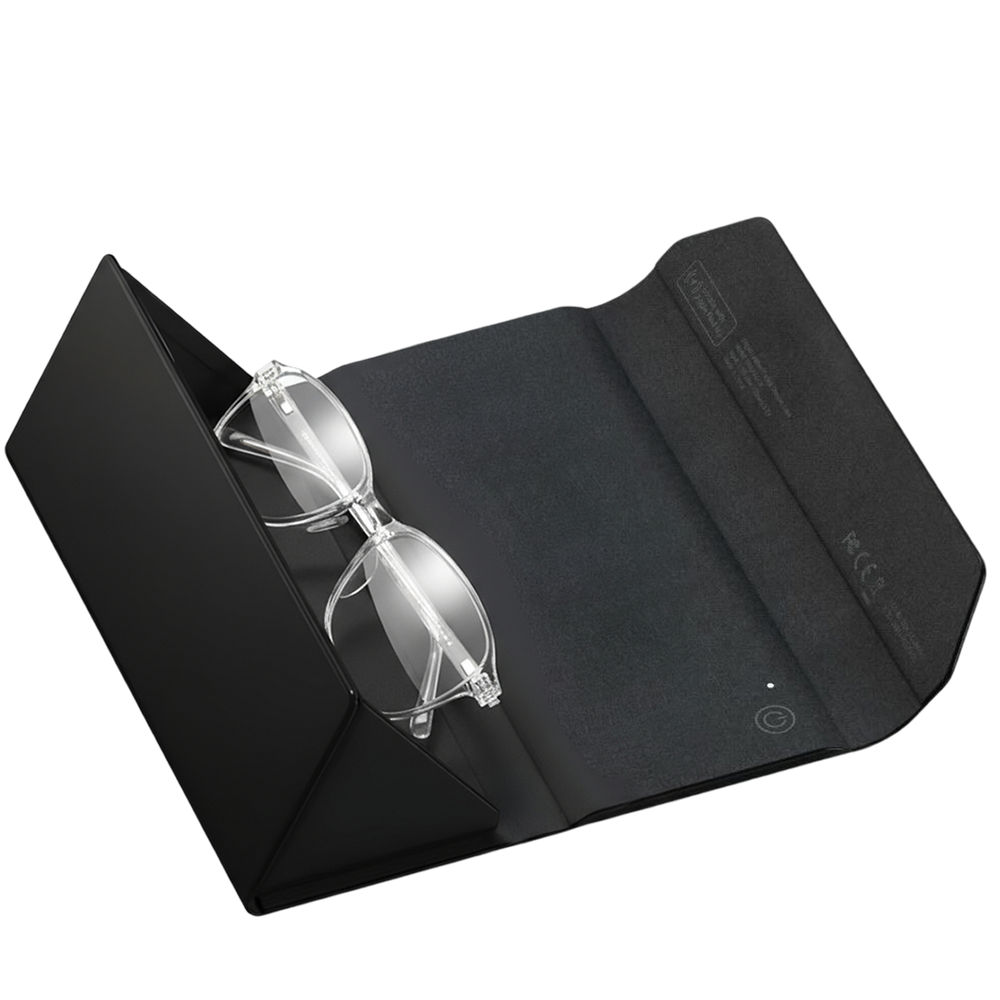
"I love this card. So far I have put the one I bought in my glasses case, which is in my purse. Now I can find both. I only wish I had bought more. (And fewer AirTags)"
Spotminders takes it, and here's why
Three months, dozens of frantic pocket-pats, and one honest side-by-side later: the Spotminders Tracking Card is the one that stayed in my wallet. The RhinoKey went back in a drawer as a spare around week six.
To be fair, the RhinoKey is a genuinely good card. For about $42 it gives you the same 1.8mm slim body, a loud find-my-card alarm, and one trick the Spotminders cannot match: it works with Android phones through Google Find Hub, not just Apple. If half your household carries Android, that flexibility earns its place. We are not here to trash it.
But once you carry both every day, the battery and charging gap starts to decide it. The RhinoKey runs about five months, then needs its own proprietary pad to top up, and mine shipped without one for an extra fifteen dollars. The Spotminders charges on any Qi or MagSafe pad you already own and held its charge for roughly eight months. After 90 days the Spotminders still had not seen a charger. The RhinoKey wanted a refill by week ten.
Durability is the other gap. The Spotminders is rated IP67, so it lived through a rainy commute and a full wash cycle in a forgotten jacket without a flicker. The RhinoKey is sold as water-resistant but carries no IP rating, and after one soaking mine took a while to check back in. When a card rides in a wallet that goes everywhere, a tested waterproof rating is the one I trust.
Then there is price and peace of mind. The Spotminders is $39 one-time, a touch under the RhinoKey once you add its separate charger, and it is Apple MFi-Certified with a lifetime replace-or-refund promise. Neither card charges a subscription, which is how it should be, but the Spotminders backs it with a 4.8 rating from more than nineteen thousand owners and a warranty that never runs out.
A 1.8mm card that charges on any Qi or MagSafe pad, shrugs off water at IP67, and runs about eight months per charge. The RhinoKey is a solid dual-platform pick, but it needs its own charger and a top-up sooner. The Spotminders costs less and just works for Apple users.